
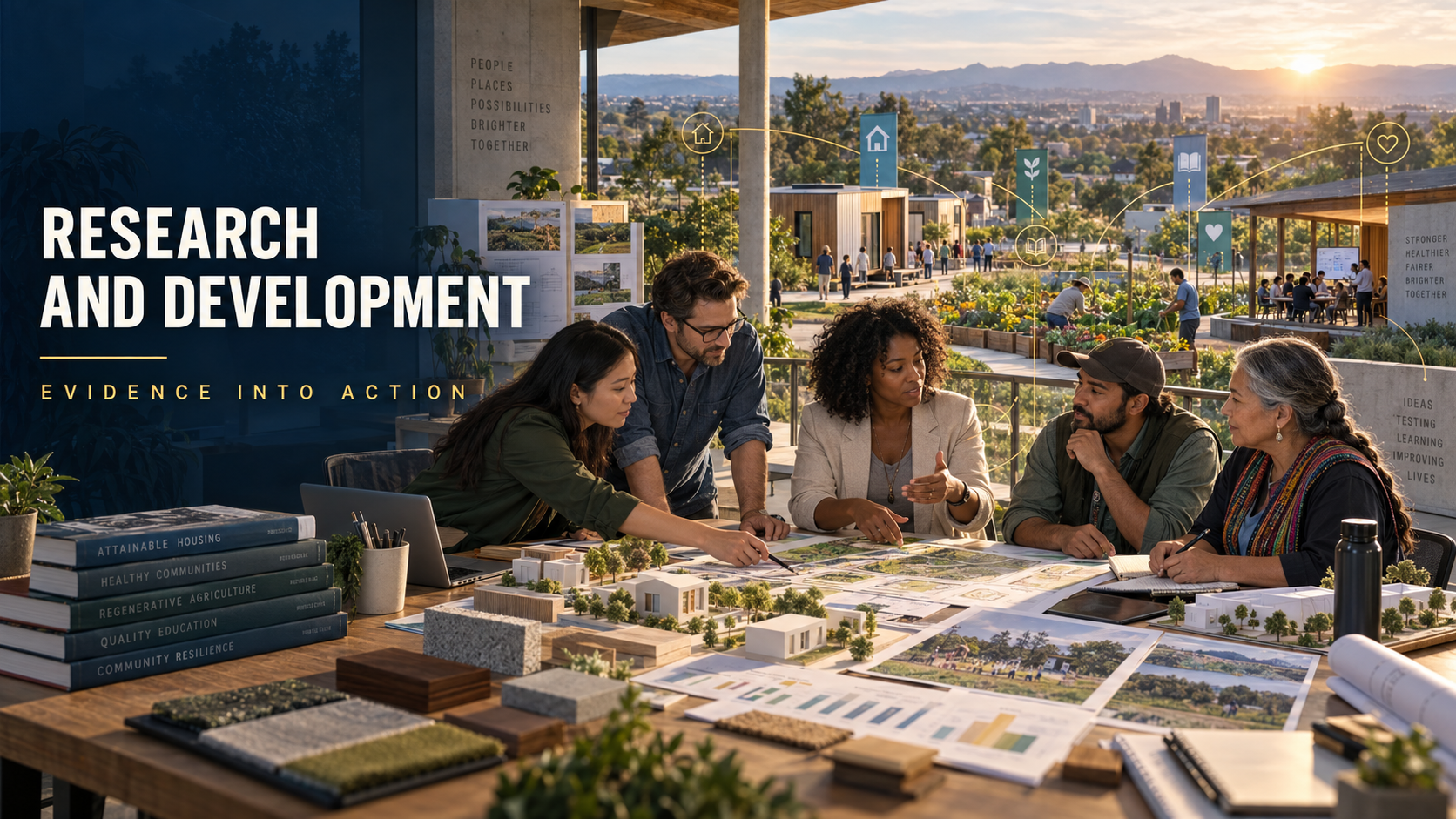
Research and Development
 Dr. Amichai Dovid Graber
Research That Moves: Turning Knowledge Into Measurable Impact
Good intentions matter—but they are not enough.
Too often, decisions are driven by emotion, assumptions, or ideas that sound inspiring but have never been tested. Money is spent, programs are launched, and success is declared without knowing what truly changed.
Research and development provide a better path. They help us understand a problem, calculate the real cost of addressing it, measure the results, and improve the solution while it is being implemented.
From Static Research to Living Research
Traditional research often studies a problem and produces a report months—or even years—later. That information can be valuable, but communities cannot always wait for a final report before acting.
A more practical approach is a living research model that connects research directly to execution.
Instead of separating study from action, this method captures real-time data while solutions are being applied. It allows us to see what is working, what is costing more than expected, where people are being left behind, and what needs to change.
The process is straightforward:
Measuring More Than Activity
Impact is not measured by how many meetings were held, dollars were spent, or promises were made. It is measured by what actually improved.
Did a family gain stable housing? Did a struggling business survive and create jobs? Did someone develop skills that led to meaningful work? Did a neighborhood become safer, healthier, and more connected? Was the outcome achieved at a cost that can be sustained and repeated?
These questions transform activity into accountability.
Let Emotion Inspire—Let Knowledge Guide
Compassion should motivate us to act, but evidence must help guide that action. Emotion can reveal urgency; research helps determine the right response.
This does not remove humanity from the process. It protects it.
By combining lived experience, professional research, financial analysis, and real-time information, we can make decisions based on what people genuinely need—not what others assume they need. We can respond faster, use resources more responsibly, and remain honest when an approach needs to change.
Building Solutions That Continue to Learn
Every project should be an opportunity to learn. The goal should not simply be to complete programs or spend available funding. It should be to create measurable models that show what works, what it costs, whom it helps, and how it can be improved or repeated.
Research should not sit on a shelf. Data should not merely describe a crisis after the damage has already been done.
Research must move with the work—informing decisions, measuring progress, and helping us build solutions that become stronger with every life they touch.
Meaningful change requires more than hope. It requires the courage to act, the discipline to measure, and the humility to keep learning.